Writing at Bourton Primary:
At Bourton primary, writing is taught so that pupils have strong foundations within handwriting and spelling in order to free up their working memory and become fluent, confident and creative writers. Pupils use oracy to compose their sentences and aid their learning so they can elaborate and explain their understanding clearly. We give our pupils meaningful writing experiences and a chance to explore topics they enjoy in order to develop a love of writing while developing a wide vocabulary, an understanding of grammar and the structures of written and spoken language. They are taught how to write clearly, accurately and fluently for a range of contexts, genres, purposes and audiences.
- Handwriting:
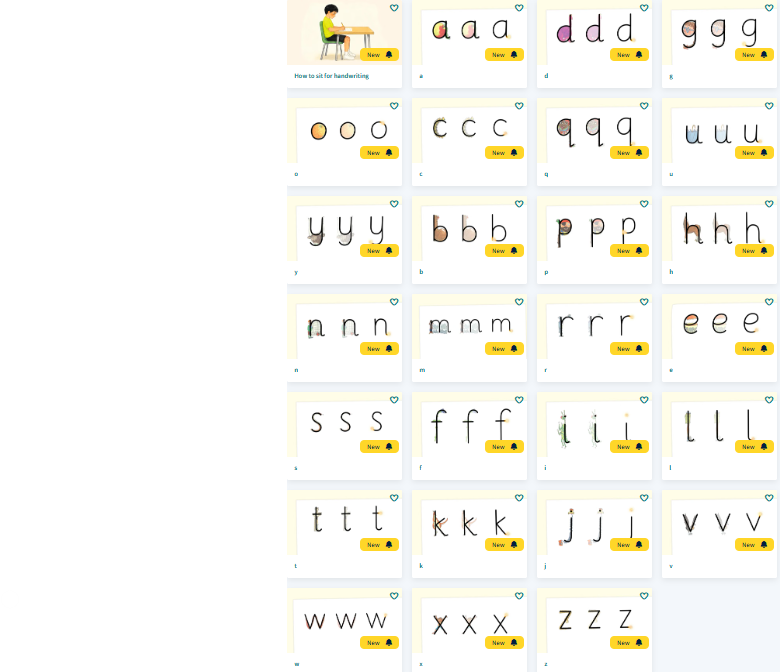
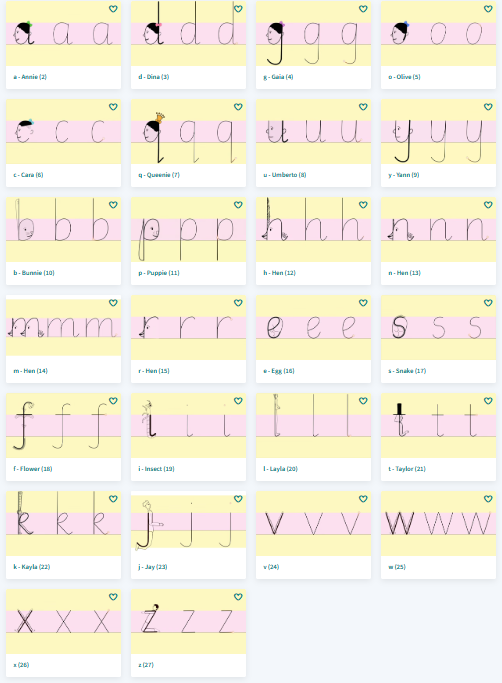
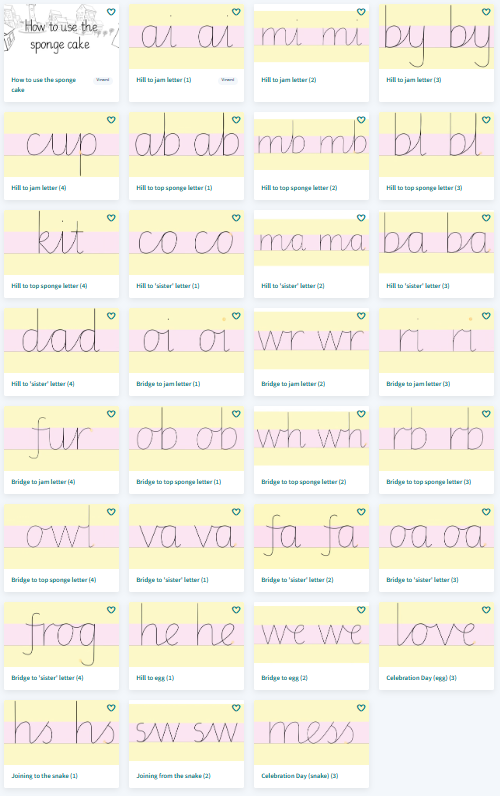
Handwriting is taught daily outside normal phonics/literacy lessons. To build strong foundations, teaching of correct letter and number formation begins early in reception using the RWI letter formation format and continues into KS1. When children have mastered print handwriting, children begin to learn joined handwriting following the RWI handwriting scheme.
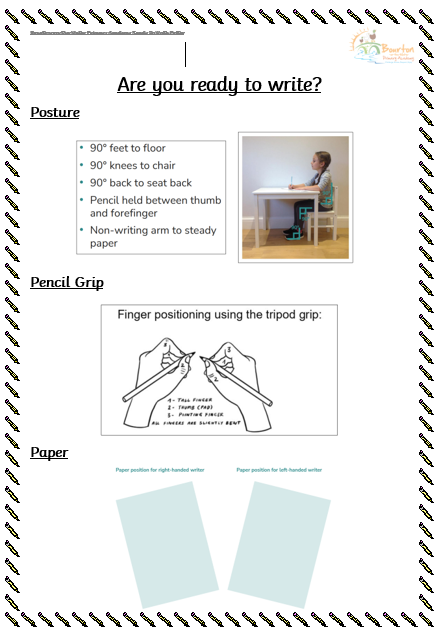 Early on, children are taught routines that support a comfortable writing position and enable them to write legibly. Children are reminded of our ‘ready to write’ routines throughout the day and across the school. From reception, children are taught how to hold the pencil using the tripod grip.
- Handwriting stages
Stage 1: Children begin learning letter formation from Preschool.
Stage 2: Children begin to learn stage 2 in Year 1
Stage 3: Children move on to stage 3 once they have mastered the previous stages.
- Spelling:
Children begin learning how to spell in reception using the RWI scheme. Children who have completed the RWI scheme will move on to the English National Curriculum’s statutory spelling rules relevant to their phase with children tested every week. In KS2, children are assessed regularly and organised into small groups within each phase. Spelling lessons include tasks that allow children to practice and apply what they have been taught – this includes learning common exception words, dictations and opportunities to explore the morphology of words. Common exception words are assessed in September and at Easter to check whether children are on track to spell the National Curriculum word lists correctly.
Below is a link to the Spelling National Curriculum. Here you can find the list of words your children will need to learn to spell.
Spelling curriculum – includes word lists
- Literacy lessons:
Literacy lessons take place daily and follow the Bourton-on-the Water teaching model structure. As a school we understand the importance of talk and how valuable it can be for our writing. Because of this, children begin to compose simple sentences orally from reception. This continues as children progress throughout the school as they are encouraged to ‘think, nest and write’ their sentences and discuss their ideas as a class. Children are also encouraged to read aloud their writing to check that it makes sense and identify any errors. Teachers explicitly model written language structures when speaking by rephrasing or extending what children say. They use prosody to model stress and intonation of language. Model texts and shared writing opportunities are used to develop children’s awareness of written structures and techniques. Children are given sufficient time for planning, writing and editing their work with an emphasis on quality over quantity.
Below is a link to the National Curriculum glossary. Here you will find definitions and examples of what your children will be learning during their literacy lessons.
The National Curriculum in England - Glossary